Questions: Building & moving
Building, remodeling and moving with propane
For a new home or an addition, plan the tank before the site work: Placer County's handout keeps tanks 5, 10 or 25 feet from buildings and property lines depending on size, and the fire district or permit office has the final say. When you move into or out of a propane home, call the office first, because a new customer's system gets a leak test before the first fill.
How many homes in the foothills use propane?
A large share outside the town centers. The Census Bureau's 2020 to 2024 estimates put propane or other tank gas as the heating fuel for about one household in three in Nevada County (32.1%) and a bit over one in four in El Dorado County (27.4%). Placer County as a whole is lower at 7.8%, because about 61% of its homes use utility gas, but the rural ZIP areas near Meadow Vista, Colfax and north of Auburn run well above that.
I'm moving from a city with natural gas service. What changes with propane?
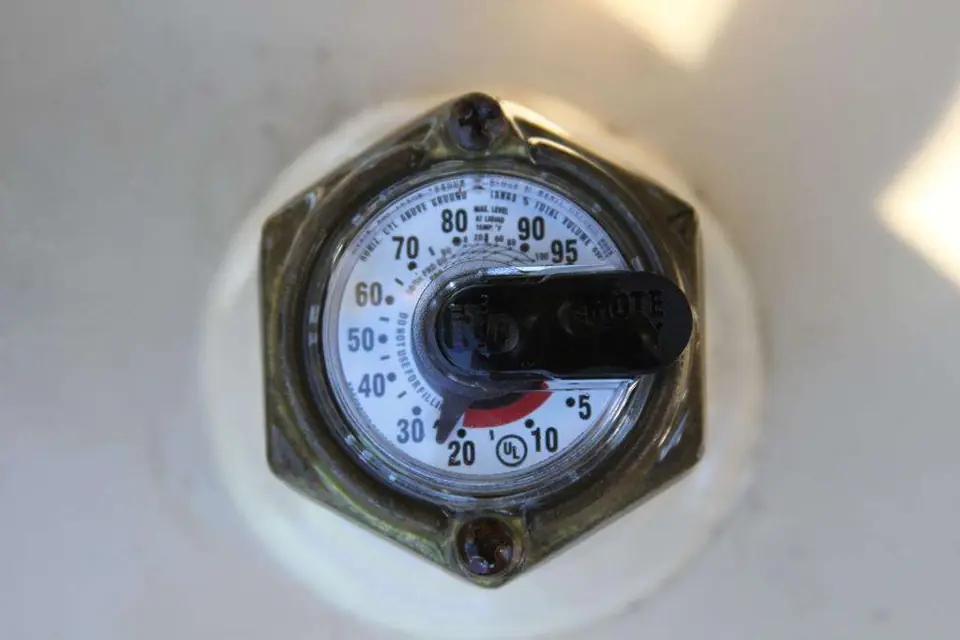
The fuel is stored in a tank on your own property, so someone has to keep an eye on the level. You can let us schedule deliveries for you with Keep Full automatic delivery, or read the gauge and call when it reaches about 30%. Appliances have to be set up for propane, since natural gas models need a conversion, and the safety rule does not change: if you smell gas, leave the building first, then call 911 and us from outside.
What should I ask the seller about the propane tank before closing?
Ask which company fills the tank, whether it is leased or owned, its size, the current gauge reading, and whether anything on the system has been red-tagged. The metal data plate lists the tank's capacity. Bring those answers to the office and we will help you line up service before move-in day.
How do I close my propane account when I sell or move out?
Call the office with your move-out date and a forwarding address so the final bill reaches you; you can pay it through the online portal as usual. Tell us whether the tank is leased or owned and, if you know, who is moving in, and we will explain what happens with the tank and the propane left in it.
Can I take my propane tank with me when I move?
Not a leased tank, because it belongs to the company that leased it. A tank you own is yours, but whether it goes with the house is something to settle in the sale contract. Either way, disconnecting, emptying and hauling a tank is work for a qualified propane professional, never a moving crew.
How close can a propane tank be to my air conditioner or a window?
Placer County's tank handout says that on any tank filled on site, the fill connection and the fixed liquid level gauge must be at least 10 feet from an outside source of ignition, such as the electrical service, a furnace or an A/C compressor. The same 10 feet applies to the air intake of a direct-vent appliance or a mechanical ventilation system. Plan the tank and the condenser together so nothing has to move later.
Is there any way to set a larger tank closer than 25 feet to the house?
Sometimes. Placer County's handout lets a single tank of no more than 1,200 gallons sit 10 feet from buildings and property lines, as long as no other tank is within 25 feet. Larger tanks and multi-tank setups follow the 25-foot rule, and the permit office confirms what fits your lot.
Does an underground propane tank need an inspection before my new house gets its final?
Yes. Placer County's handout says underground LPG tanks are inspected and approved by the local fire district with jurisdiction before the building final. Build that step into your schedule, and call us early so the tank is set in time.
What goes into the trench for a new propane line?
Placer County's handout allows buried gas pipe of gas-rated plastic (PE) or steel with a factory coating. It wants 12 inches of soil over the pipe at minimum, 18 where outside forces could damage it, plus a locating wire or tape running the whole length of any plastic line, and the finished piping is pressure tested. Our underground gas line service handles runs to the house or a shop.
I'm adding onto my house. Does the propane tank have to move?
It might. Setbacks are measured from buildings, so an addition can leave an existing tank too close; the Placer handout calls for 10 feet between a 126 to 500 gallon tank and a building. Call the office while the plans are still on paper, since moving a tank or rerouting its line changes the system and is followed by a leak test.
My lot is above 2,500 feet. Are there extra rules for propane appliances?
In Placer County there can be. The county's propane appliance handout says that between 2,500 and 5,000 feet the building designer must spell out how unburned gas can escape any underfloor appliance space, including keeping the propane drain clear of snow. Above 5,000 feet a stricter county policy applies, so check with the building office early.
Who sets the tank on a new build?
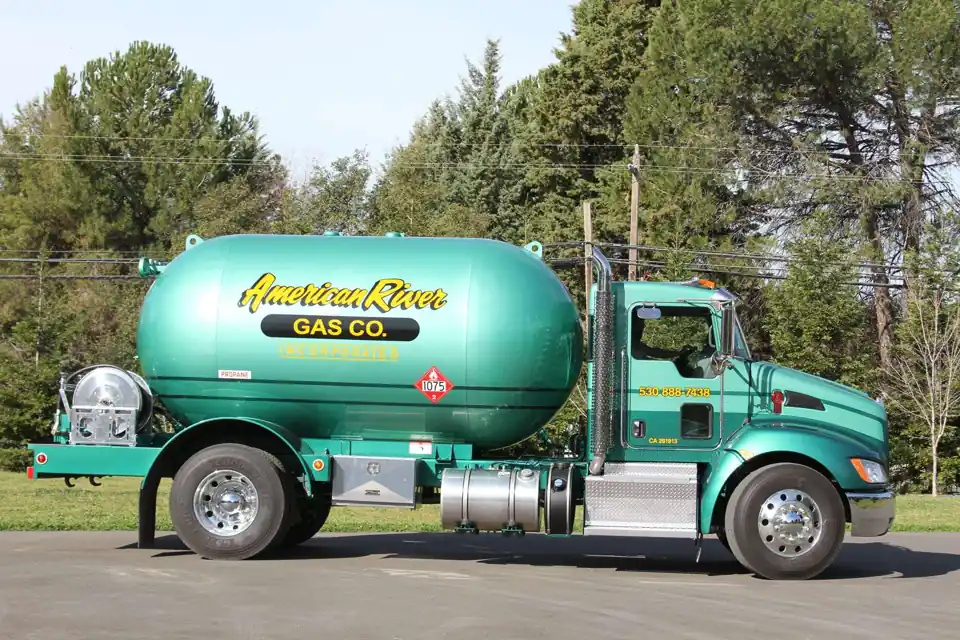
American River Gas sets new tanks, including crane-truck sets, installs the regulators and runs the underground line to the house. Because the tank arrives on a truck, tell the office early about your driveway, the slope and where you would like the tank, and we will talk through the placement options with you. A leak test follows before the system goes into service.
I'm renting a house that uses propane. Who orders the gas?
Check your lease: whoever it makes responsible for fuel should open the account with the office. Whoever pays, the tenant should know where the tank is, how to read its gauge and where each appliance's shut-off valve is.
Sources: Placer County Building Services: LP gas tank installation below 5,000 ft elevation (setbacks, trenching, testing) (opens in a new tab) · Placer County Building Services: propane appliances handout (CMC 303.7.1 and elevation notes) (opens in a new tab) · U.S. Census Bureau: ACS 2020-2024 5-year estimates, table B25040 (House Heating Fuel), Placer, Nevada and El Dorado counties (opens in a new tab)
Newcastle yard · since 1966
Questions about propane?
Call the office and talk to a real person. Or leave your details and we call you back.
Monday-Friday 8:00 AM-4:30 PM (closed noon-1:00 PM)
After hours, weekends and holidays, our answering service reaches a staff member.