Buying, building & moving
Planning propane for new construction: tank placement and setbacks
Plan the propane tank while the site plan is still on paper, because tank size sets the minimum distance from the house, property lines and ignition sources, and the delivery truck has to reach it. Show the tank and gas line on your plans, let your permit office confirm the setbacks, and call us early so the tank, underground line and regulators go in on your build schedule.
Updated · American River Gas office, Newcastle
Why the tank belongs in the first draft of the site plan
On a foothill lot, the house pad, septic field, well, driveway and any outbuildings all compete for the same ground, and the propane tank has its own spacing rules on top of that. Show the tank and gas line on your site plan; the permit office will confirm placement. It pays to pick the spot before the plans go in.
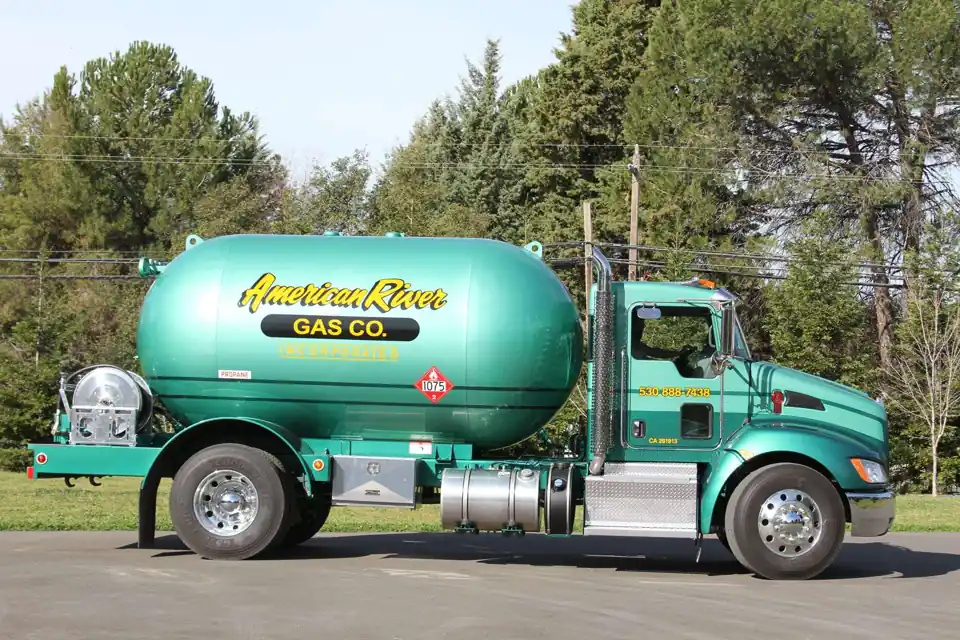
The tank location also sets the length of the gas line to the house, where the trench runs, and how far our driver has to carry the hose. Our delivery hose is 120 feet, and every bend around a corner or obstacle uses some of it.
Setback distances in plain terms
Placer County's handout for installations below 5,000 feet lists these distances for above-ground tanks, and your local building and fire officials apply them:
- Up to 125 gallons: at least 5 feet from buildings and property lines, with some conditions allowing placement next to the building.
- 126 to 500 gallons: at least 10 feet from buildings and property lines.
- 501 to 2,000 gallons: at least 25 feet, though a single tank of 1,200 gallons or less may sit 10 feet away when no other tank is within 25 feet.
- Any tank filled on site: the fill connection and fixed liquid level gauge at least 10 feet from ignition sources such as the electrical service, an A/C compressor, or the air intake of a direct-vent appliance or ventilation system.
Distances change with elevation and the code cycle
Above 5,000 feet, Placer County defers tank installation rules to the local fire district. Codes are also updated on a regular cycle, so treat any published number as a starting point. Your installer and the local permit office confirm tank placement and setbacks for your lot.
Access for the delivery truck
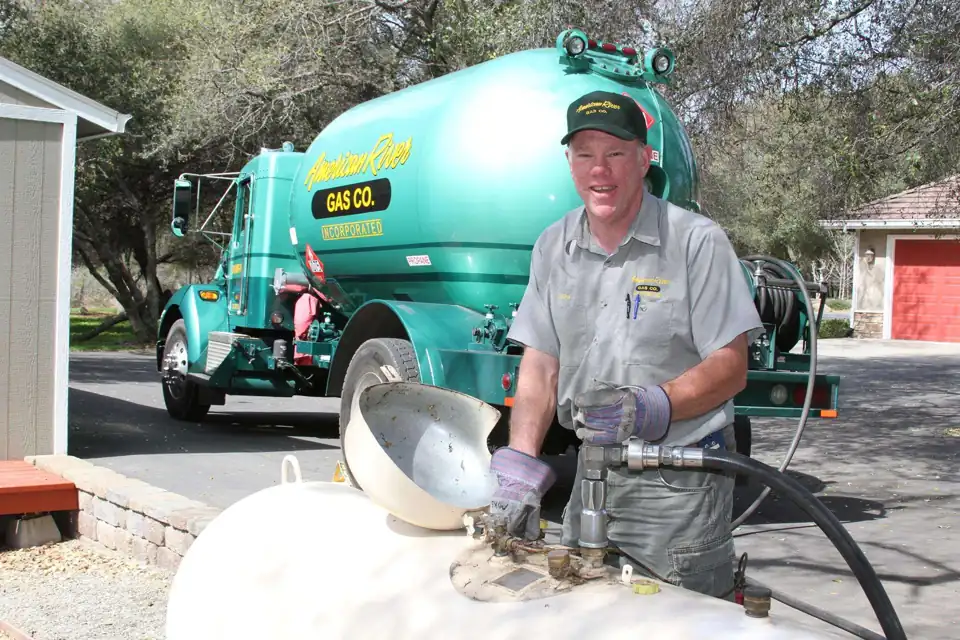
A good tank spot is one a propane truck can reach in every season. Think about driveway grade in winter, a turnaround, gates and overhead branches. Keep the path from the driveway to the tank clear of fences, planters and future landscaping.
Above ground or underground
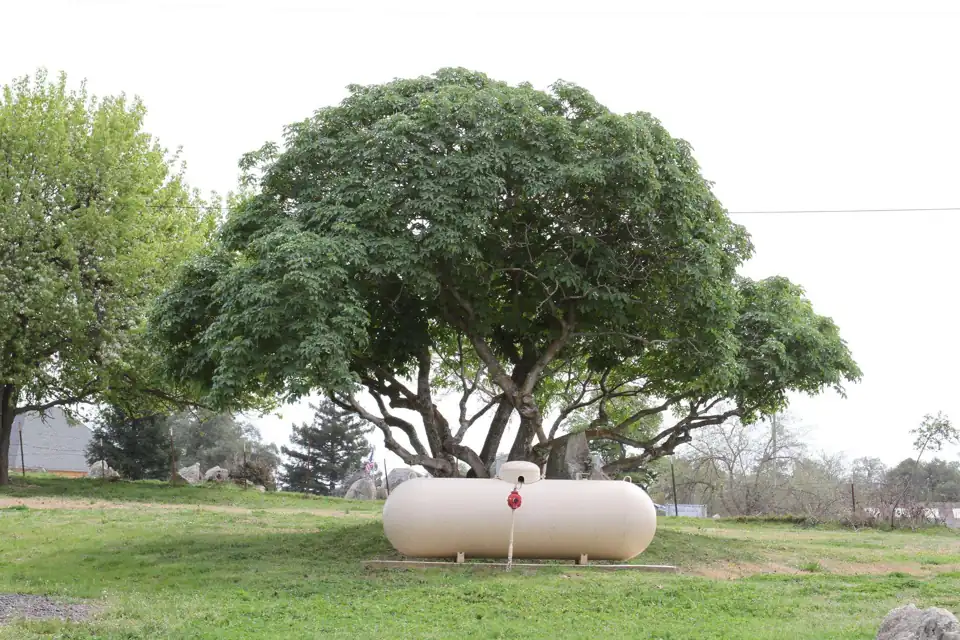
Above-ground tanks are simple to inspect and service. Underground tanks keep the yard open and out of sight, with only the dome showing. In Placer County, underground LP tanks are inspected and approved by the fire district before the building final. Either way, the gas line from the tank to the house is buried, and the county handout calls for at least 12 inches of cover, 18 inches where the pipe could be damaged, plus a tracer wire along plastic pipe so the line can be found later.
Appliances, venting and the crawlspace
Propane is heavier than air. California's Mechanical Code does not allow propane appliances in a pit, basement or similar low spot where gas could collect, and an under-floor location needs an approved way for unburned gas to escape. Placer County's propane appliance handout adds details for foothill elevations, so bring it to your designer before the mechanical plan is final.
List every propane appliance early, including furnace, water heater, range, dryer, fireplace and pool heater. The total load drives tank size and gas line size, and it is far easier to size a line once than to trench twice.
How we fit into the build
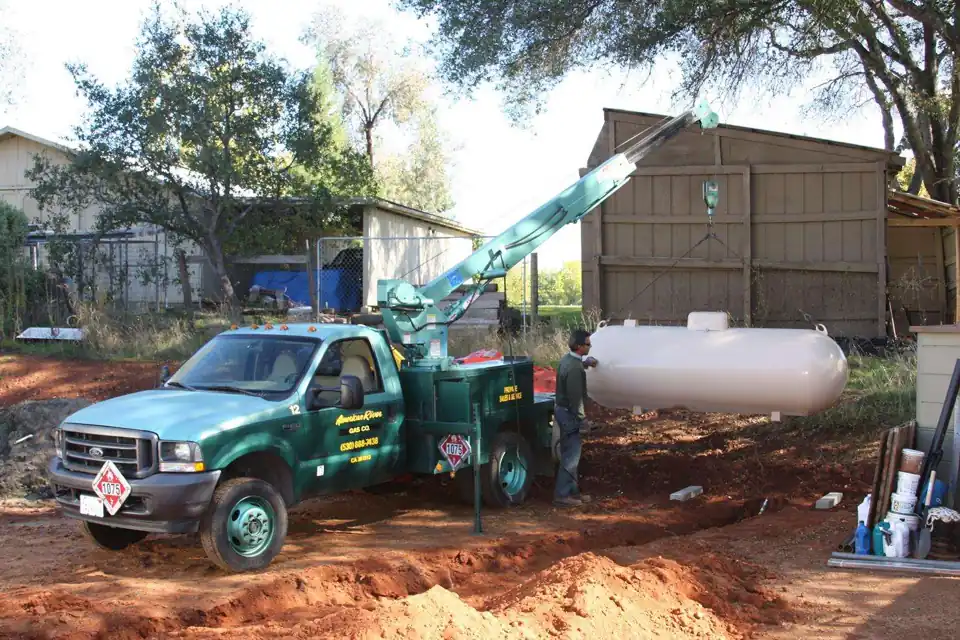
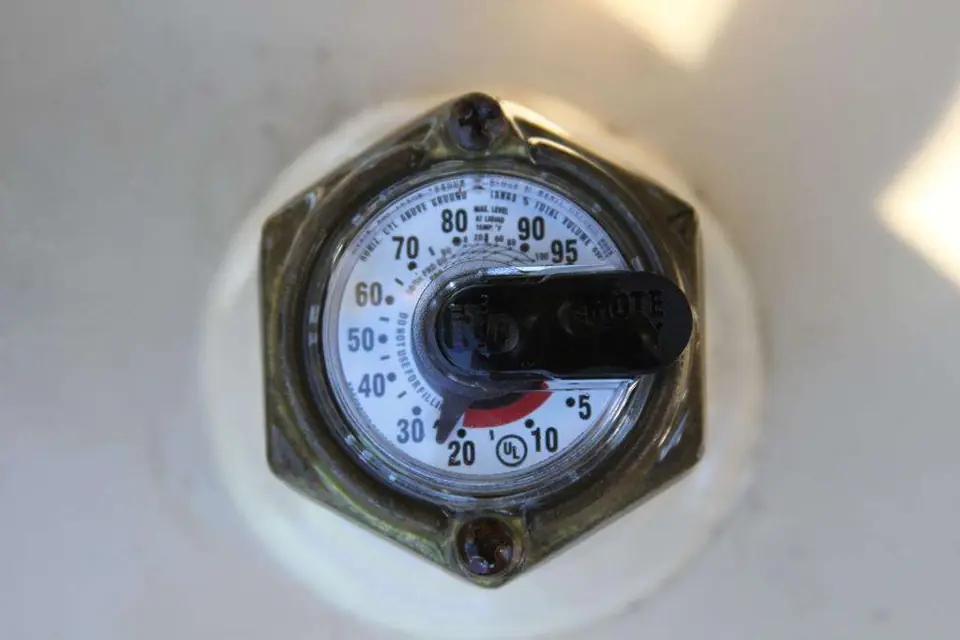
We set tanks, run the underground piping from the tank to the house and install the regulators. Before the system goes into service, a pressure check and leak test are done, as they are on every new installation. Once you are moved in, you can sign up for Keep Full automatic delivery, or call us when the gauge reads about 30%. If you smell gas, leave the building first, then call 911 and us from outside.
Questions
Straight answers
How far does a propane tank have to be from the house?
It depends on tank size. Placer County's handout lists at least 5 feet from buildings and property lines for tanks up to 125 gallons, 10 feet for 126 to 500 gallons, and 25 feet for 501 to 2,000 gallons above ground. Underground tanks are inspected and approved by the local fire district. Your installer and the local permit office confirm tank placement and setbacks for your lot.
Does the propane tank need to be on my building plans?
Yes. Show the tank and gas line on your site plan; the permit office will confirm placement.
How deep does the propane line need to be buried?
Placer County's handout calls for at least 12 inches of cover, and 18 inches where the pipe could be damaged. Plastic gas pipe also needs a tracer wire.
When should I call about propane for a new home?
Before the site plan is final. Tank location, line length and truck access are easiest to solve on paper, and it keeps the tank set and line install on your build schedule.
Related
Keep reading
Sources: Placer County Building Services: LP gas tank installation below 5,000 ft (handout) (opens in a new tab) · Placer County Building Services: propane appliances (handout) (opens in a new tab) · NFPA 58, Liquefied Petroleum Gas Code (National Fire Protection Association) (opens in a new tab) · Propane Education & Research Council: residential construction (opens in a new tab)
Newcastle yard · since 1966
Questions about propane?
Call the office and talk to a real person. Or leave your details and we call you back.
Monday-Friday 8:00 AM-4:30 PM (closed noon-1:00 PM)
After hours, weekends and holidays, our answering service reaches a staff member.