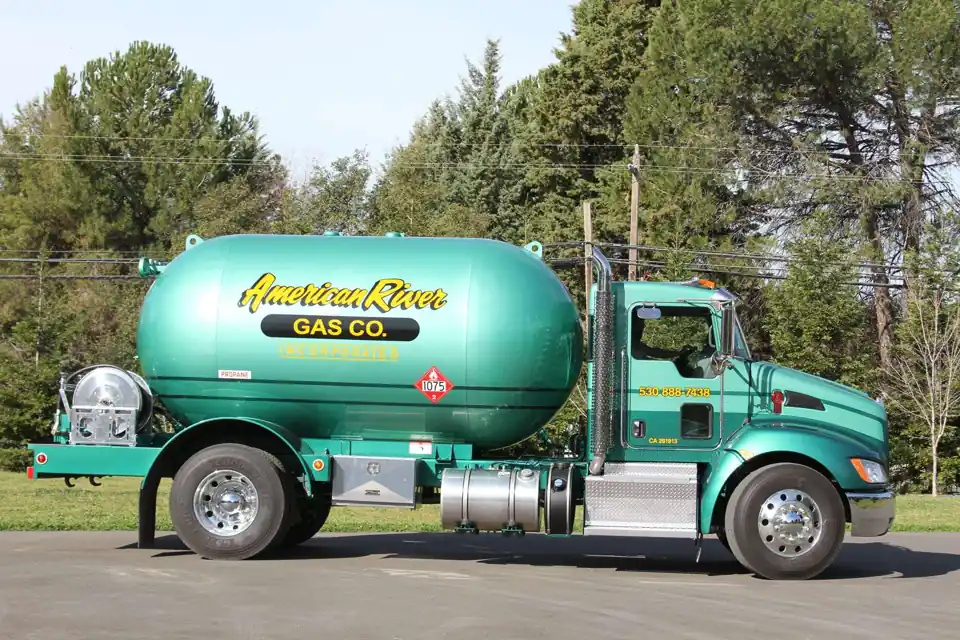
Questions: Tanks & gauges
Propane tank and gauge questions
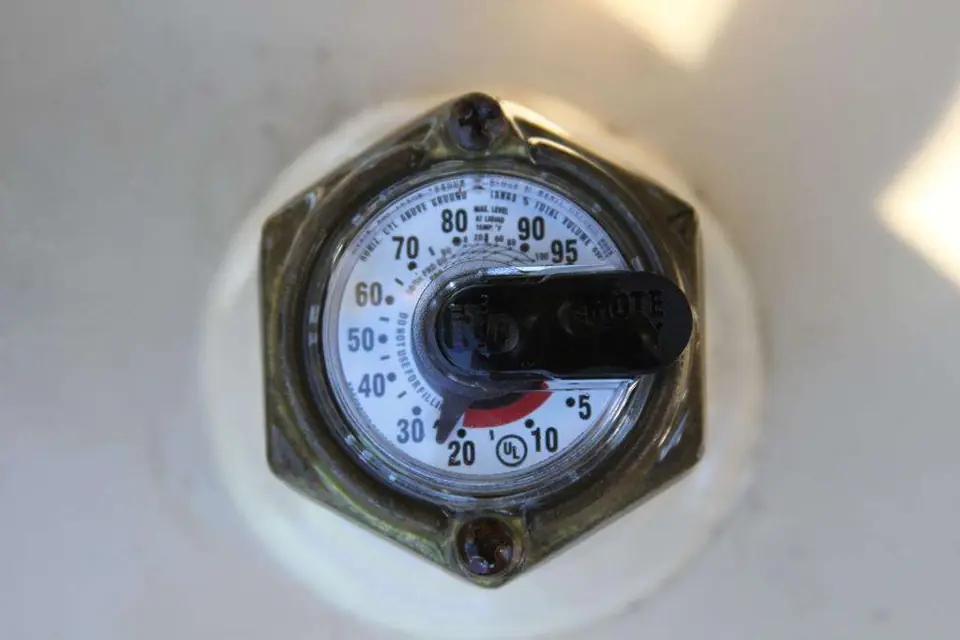
The dial under your tank's dome shows what percent of the tank holds propane, not gallons, and if you order your own deliveries you should call us when it reads about 30%. For anything about the tank itself, such as damage, a move, its size or a reading that looks off, call the office at (530) 888-7438 before you touch it.
Where do I find the gauge on my propane tank?
On an above-ground home tank, lift the hinged cover on the top center. The gauge sits under it next to the valves, and it is the dial numbered 0 to 100. Put the lid back down afterward to keep weather off the valves.
My tank has more than one dial under the lid. Which one shows how much propane is left?
Read the dial marked from 0 to 100; that is the percentage gauge. If you are unsure which one you are looking at, snap a photo and call the office, and we can tell you what each part is.
My 500-gallon tank reads 60%. How many gallons is that?
Roughly 300 gallons, because the needle shows a share of the tank's total capacity. The same math works for any size: 60% on a 250-gallon tank is about 150 gallons. Treat the result as an estimate, since the dial is only marked in steps and the liquid level shifts with temperature.
How many gallons will a delivery put in my tank?
That depends on the tank size and where the needle sits when the truck arrives. We fill to about 86% in winter and 80% in summer, so a 500-gallon tank reading 30% in January takes roughly 280 gallons to reach about 430. A 250-gallon tank at the same reading takes roughly 140 gallons.
Why does my gauge read higher on a hot afternoon than it did that morning?
Liquid propane swells as it warms, so the level inside can rise a little in the afternoon heat and drop back overnight. You have not gained any fuel. That swelling is the reason a tank is never filled all the way: the space at the top leaves room for it.
What does the red area on my propane gauge mean?
The top of the red band usually marks 20%. A needle at or near the red means you are already past the point where we suggest ordering, so call the office that same day rather than waiting for zero.
My gauge says 10%. How long will that last?
Nobody can say for sure, because it depends on the tank size, the weather and which appliances are running. Call (530) 888-7438 right away and lower the thermostat a few degrees to stretch what is left. If the tank goes dry, the system needs a pressure check and leak test before the gas can come back on, and the homeowner has to be present for it.
How do I find out what size my propane tank is?
Check the metal data plate on the tank. It lists the water capacity and whether the tank was made for above-ground or underground use. If the plate is faded or hard to reach, call the office with your address and the company name painted on the tank, and we will help you sort it out.
The glass on my tank gauge is cracked or fogged. Who fixes it?
Call the office and describe what you see, and do not try to open or swap the gauge yourself. A leased tank is kept in working order by the company that owns it. If the tank is yours, our tank maintenance service can look at it, and any repair to the system is followed by a leak test.
Does a large propane tank expire like a grill cylinder?
The 12-year requalification date in federal DOT rules (49 CFR 180.209) applies to portable DOT cylinders, such as grill and RV cylinders. The big tank in your yard is a different kind of container, identified by its data plate rather than a date stamp on a collar. Its condition is checked instead: every system check includes an inspection of the tank.
Is it OK to stack firewood or store things against my propane tank?
No. Keep objects off the tank and away from it so the driver can reach the valves and nothing knocks the fittings. California's fire-safe clearance rule (14 CCR 1299.03) calls for 10 feet around an LPG tank cleared to bare mineral soil, with no flammable vegetation for another 10 feet beyond that, so keep woodpiles, brush and dry grass well back.
Sources: California Code of Regulations, 14 CCR 1299.03: defensible space clearance around LPG tanks (opens in a new tab) · 49 CFR 180.209: requalification of DOT cylinders (opens in a new tab) · Placer County: Liquid propane gas tank installation below 5,000 feet (handout) (opens in a new tab) · Propane Education & Research Council: Propane safety and winter storms (PDF) (opens in a new tab)
Newcastle yard · since 1966
Questions about propane?
Call the office and talk to a real person. Or leave your details and we call you back.
Monday-Friday 8:00 AM-4:30 PM (closed noon-1:00 PM)
After hours, weekends and holidays, our answering service reaches a staff member.