Tanks & gauges
Propane tank sizes: which tank fits your home
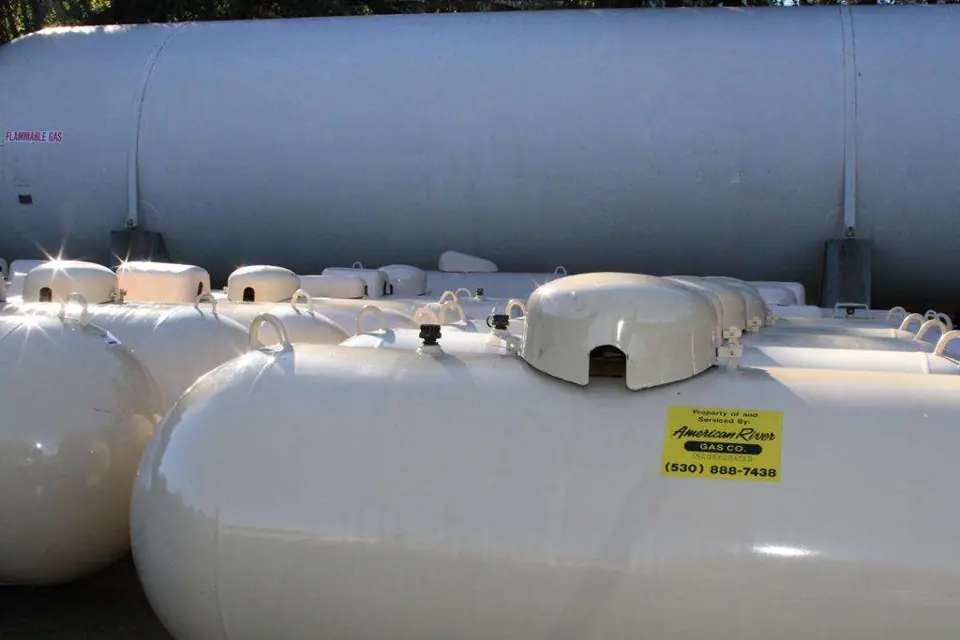
Most foothill homes use a 120, 250, 500 or 1,000-gallon propane tank, and the right size depends on what the propane runs: a small tank suits a water heater, range or fireplace, while a 500-gallon tank is the common choice for a house heated with propane. Tank sizes are measured in water gallons and tanks are only filled to about 80%, so a 500-gallon tank holds roughly 400 gallons of propane.
Updated · American River Gas office, Newcastle
What the number on a tank means
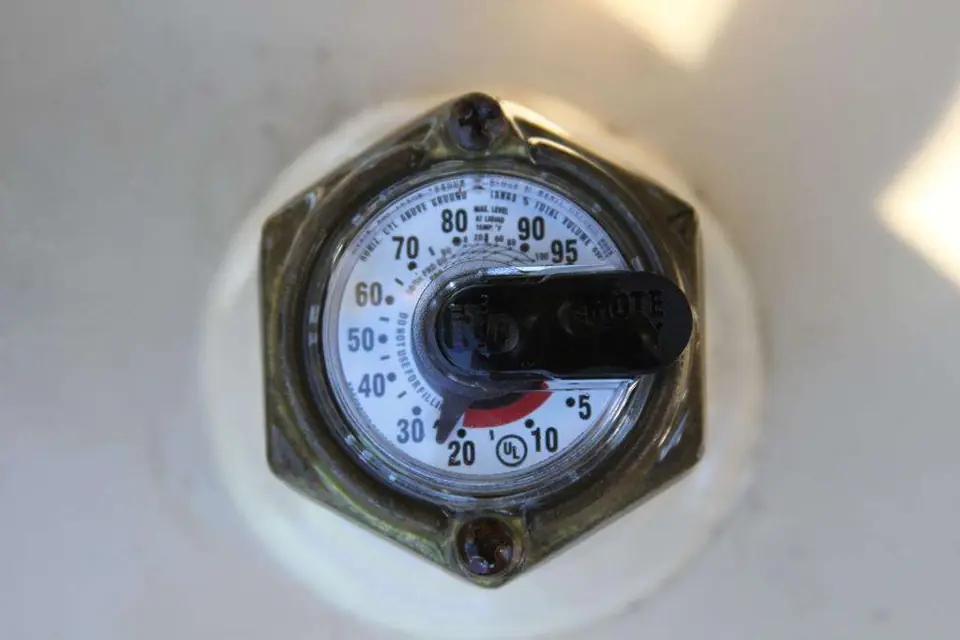
The size stamped on a tank's data plate is its water capacity, the amount of water it would hold if filled to the brim. Federal LP-gas rules require that plate to list the water capacity and the pressure the tank was built for.
Propane is never filled to 100%. It expands as it warms, so tanks are filled to about 80%, and American River Gas fills to about 86% in cold winter weather when the liquid is compact. That gives these working amounts:
- 120-gallon tank: about 96 gallons of propane at an 80% fill.
- 250-gallon tank: about 200 gallons.
- 500-gallon tank: about 400 gallons.
- 1,000-gallon tank: about 800 gallons.
Start with the appliances
Every gas appliance has a nameplate that lists its input rating in Btu per hour. The U.S. Energy Information Administration puts propane at 91,452 Btu per gallon, so dividing an appliance's rating by that number tells you roughly how many gallons it burns for each hour the burner is on.
An 80,000 Btu furnace burns a little under 0.9 gallon per burner-hour. A 40,000 Btu water heater burns about 0.44. A range, dryer or occasional fireplace adds far less. Space heating is almost always the biggest load, which is why homes that heat with propane end up with the bigger tanks.
- Water heater, range or dryer only: a 120 or 250-gallon tank is often enough.
- Whole-house heat plus the usual appliances: 500 gallons is the common fit.
- Large homes, several heating zones or a pool heater: 1,000 gallons, or two tanks, may make more sense.
Think in deliveries, not just gallons
A tank is really a buffer between deliveries. If you order your own deliveries, you call at about 30%, and our trucks reach each area on its route day, usually within a week. A tank that drops from full to 30% in two weeks of cold weather leaves little slack for a storm, a holiday or a snowed-in road.
Upsizing stretches the time between fills and gives you more reserve during a power shutoff. Keep Full customers get deliveries timed from outdoor temperatures and past use, which takes the guesswork out of it for a second home.
Bigger tanks need more room
Setback distances grow with tank size. Placer County's handout for installations below 5,000 feet lists these distances from buildings and property lines for above-ground tanks: at least 5 feet for tanks up to 125 gallons, 10 feet for 126 to 500 gallons, and 25 feet for 501 to 2,000 gallons, though a single tank of 1,200 gallons or less may sit 10 feet away when no other tank is within 25 feet. Underground tanks are inspected and approved by the local fire district.
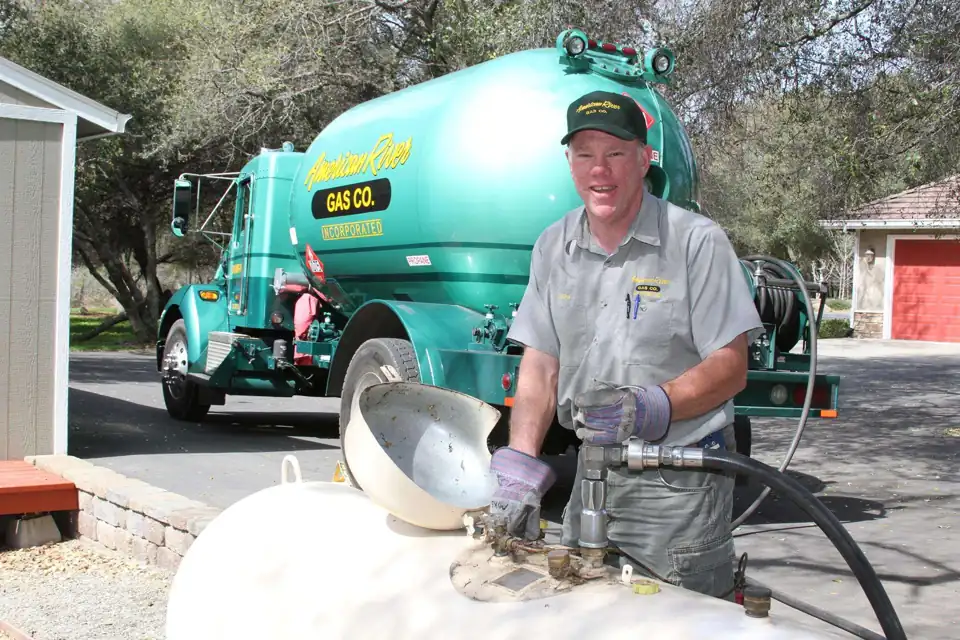
The truck also has to reach it. Our delivery hose is 120 feet long, and every bend around a fence or shed uses some of that length. Your installer and the local permit office confirm tank placement and setbacks for your lot.
Getting the size right the first time
When we set a tank, we look at the appliances you have now, the ones you are planning, how the house is used and where a truck can safely park. Tanks can be leased or owned, and we run the underground line from the tank to the house. Call (530) 888-7438 and we can walk through the choice with you.
Questions
Straight answers
What size propane tank do I need to heat my house?
A 500-gallon tank is the usual choice for a foothill home heated with propane. Larger homes or pool heaters can push that to 1,000 gallons.
How much propane is in a full 500-gallon tank?
About 400 gallons at an 80% fill. We fill to about 86% in winter, which is roughly 430 gallons.
Can a propane tank sit right next to the house?
Only small tanks. Placer County's handout lists at least 5 feet from buildings and property lines for tanks up to 125 gallons, 10 feet for 126 to 500 gallons, and 25 feet for 501 to 2,000 gallons above ground. Your installer and the local permit office confirm tank placement and setbacks for your lot.
Is a bigger tank always better?
Not always. A bigger tank means fewer deliveries and more reserve, but it needs more setback room and a longer hose run. The goal is a tank that comfortably covers the time between deliveries in your coldest month.
Can I change tank size later?
Yes. Call the office to plan it. Any change to the system is followed by a leak check before the gas is turned back on.
Related
Keep reading
Sources: U.S. Energy Information Administration: British thermal units (Btu), propane = 91,452 Btu per gallon (opens in a new tab) · Placer County Building Services: LP gas tank installation below 5,000 ft (handout) (opens in a new tab) · NFPA 58, Liquefied Petroleum Gas Code (opens in a new tab) · OSHA 29 CFR 1910.110, storage and handling of liquefied petroleum gases (container markings) (opens in a new tab)
Newcastle yard · since 1966
Questions about propane?
Call the office and talk to a real person. Or leave your details and we call you back.
Monday-Friday 8:00 AM-4:30 PM (closed noon-1:00 PM)
After hours, weekends and holidays, our answering service reaches a staff member.