Safety & seasons
Annual propane system inspection: what we check
A propane system check looks at the whole path from the tank to each appliance: the tank, regulators, piping, shut-off valves and sediment traps, followed by a leak test. Scheduling one each year, ideally before the heating season, catches worn regulators, loose fittings and appliance changes before they become a problem.
Updated · American River Gas office, Newcastle
Why an annual check makes sense
A propane system has parts that age: regulators, fittings, flexible connectors and the tank itself. Foothill homes also change over time. People add a fireplace or swap a water heater. Industry safety guidance from the Propane Education & Research Council encourages homeowners to have their propane system and appliances checked by a qualified technician, and the U.S. EPA advises having a trained professional inspect, clean and tune up central heating systems, including furnaces, flues and chimneys, every year.
Foothill conditions add their own wear. Summer heat, winter freezes, falling limbs, rodents and brush growing in around the tank all take a toll. A check before the heating season means the system is ready for the months you depend on it most, and any repair can be scheduled calmly rather than on the coldest night of the year.
What a system check covers
When our technician checks a system, these are the parts we inspect:
- Piping: the line from the tank to the house and the piping inside to each appliance.
- Shut-off valves: every gas appliance needs its own shut-off valve within 6 feet of it.
- Sediment traps: the short drip leg that catches debris before it reaches an appliance's controls. Ranges, clothes dryers, decorative vented appliances and outdoor grills do not require them.
- Regulators: inspected and tested, since they set the pressure your appliances receive.
- The tank or cylinder: its condition, valves, gauge and surroundings.
- A leak test to confirm the whole system holds pressure.
Red tags: what happens if something is unsafe
If any part of a system is unsafe or does not meet code, it is red tagged and cannot be put back into service until the problem is repaired or corrected. Only a qualified technician can complete the repair and return the system to safe working order. A red tag is not a penalty. It is how the problem gets fixed before anyone relies on the system.
When a leak test is required anyway
Some situations call for a pressure check or leak test whether or not it is time for your yearly visit. Government regulations and insurance companies require them in cases such as these:
- A new system installation or a new customer set-up.
- Repair work, modifications, additions or a shut-off.
- Running out of gas.
- A suspected leak.
- Installing a new appliance.
What you can check yourself
- Walk around the tank. Keep weeds, brush and stored items away, and never place objects on the tank.
- Look for rust, peeling paint or damage. Tanks should be a light, heat-reflective color, and a powder-coated tank should not be painted. Call us before painting any tank.
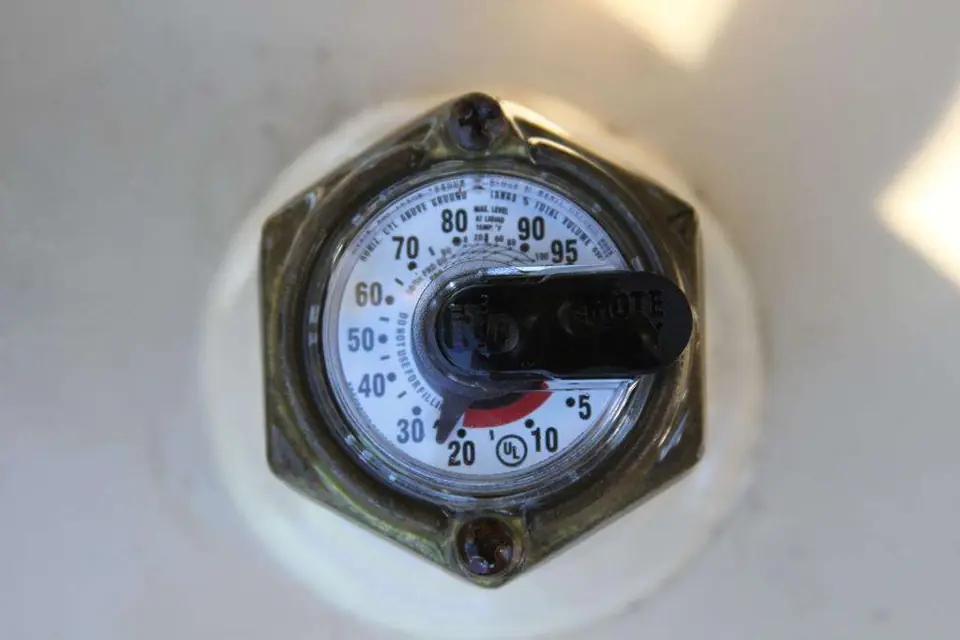
- Close the dome after reading the gauge so rain and snow stay out.
- Keep the driveway and path to the tank clear, and trim branches so the truck can get through.
- Test carbon monoxide alarms. The U.S. Consumer Product Safety Commission recommends alarms on every level of the home and outside sleeping areas.

Signs you should not wait for the yearly check
- A burner flame that is yellow, lazy or sooty instead of blue.
- Soot or scorch marks around an appliance or vent.
- A pilot that will not stay lit, or an appliance that keeps shutting off.
- A hissing sound near the tank, regulator or piping.
- A carbon monoxide alarm sounding. Get everyone outside and call 911.
- Any smell of gas, even faint or on and off.
Timing and access
Late summer and early fall are a good time to schedule, before the first cold snap and before the busy winter season. The technician needs to get into the home to reach each appliance, so plan to be there. Current customers can call the office at (530) 888-7438 to set it up. If you smell gas, leave the building first, then call 911 and us from outside.
Questions
Straight answers
How often should a propane system be inspected?
A yearly check before the heating season is a good rhythm, plus a leak test any time the system is changed, shut off, runs out or a leak is suspected.
What does a propane system check include?
The tank, regulators, piping, each appliance's shut-off valve and sediment trap, and a leak test of the whole system.
What does a red tag on my propane system mean?
Something was found unsafe or out of code. The system stays off until a qualified technician repairs it and confirms it is safe.
Do I need to be home for the inspection?
Yes. The technician needs access inside the home to check each appliance and complete the test.
Related
Keep reading
Sources: Propane Education & Research Council: propane safety in your home (opens in a new tab) · Propane Education & Research Council: safety guide for propane users (opens in a new tab) · NFPA 58, Liquefied Petroleum Gas Code (National Fire Protection Association) (opens in a new tab) · U.S. EPA: carbon monoxide and indoor air (includes CPSC alarm and annual appliance inspection advice) (opens in a new tab)
Newcastle yard · since 1966
Questions about propane?
Call the office and talk to a real person. Or leave your details and we call you back.
Monday-Friday 8:00 AM-4:30 PM (closed noon-1:00 PM)
After hours, weekends and holidays, our answering service reaches a staff member.