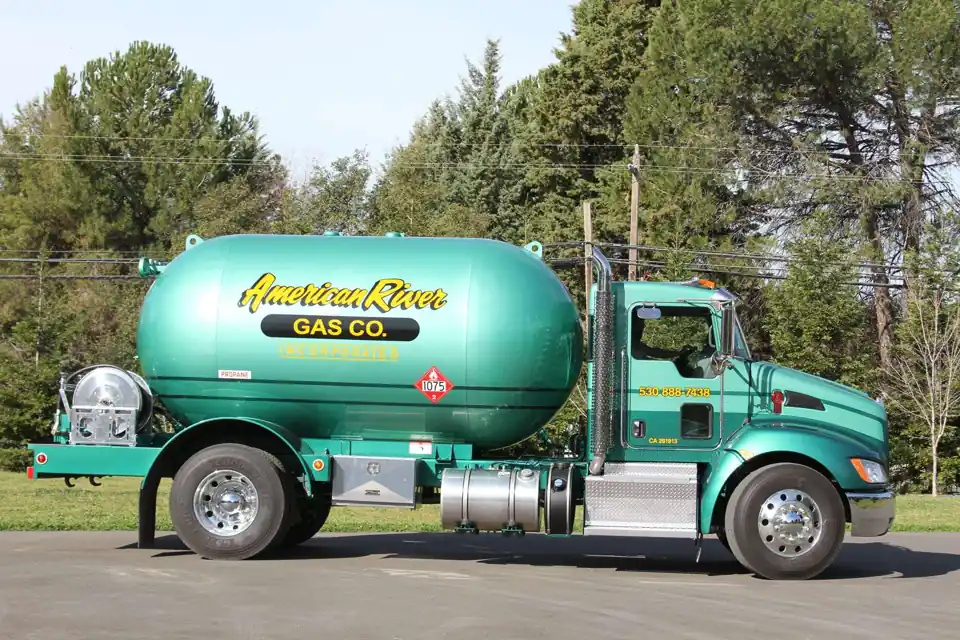
Safety & seasons
Propane safety and wildfire: defensible space around your tank
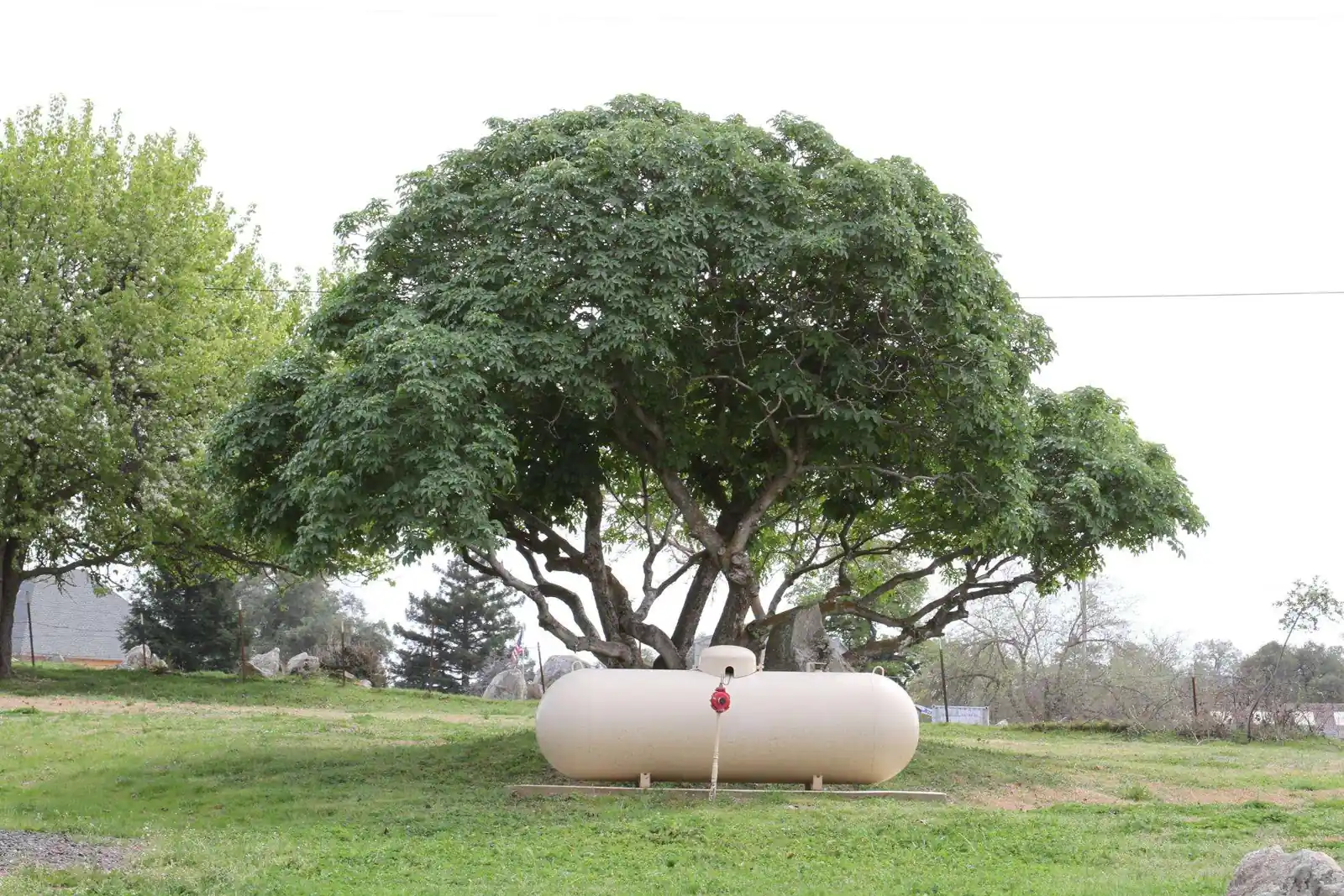
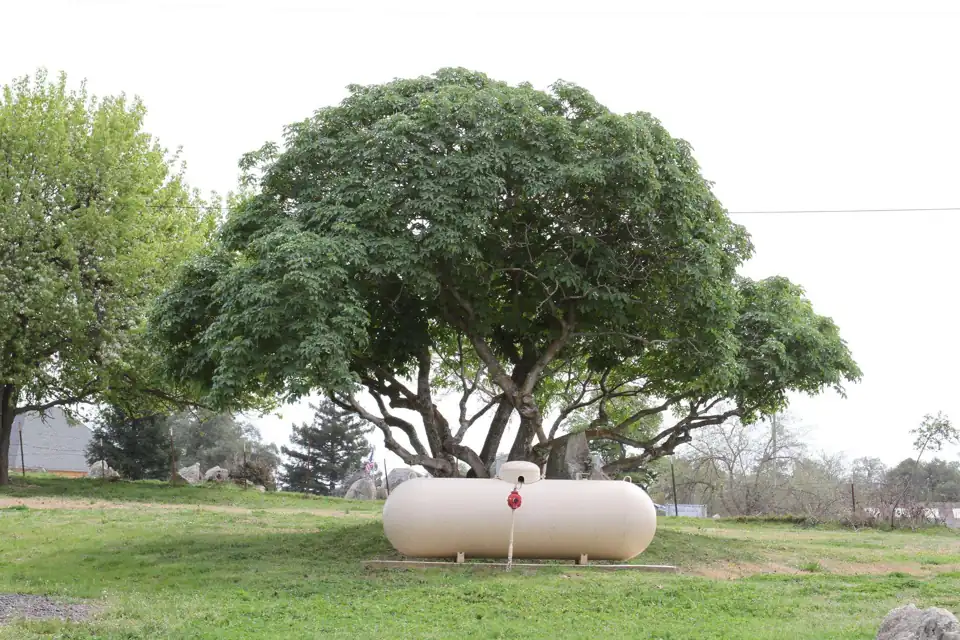
In California's State Responsibility Areas, the state's defensible space regulations call for 10 feet of clearance to bare mineral soil around a propane tank, plus no flammable vegetation for another 10 feet beyond that. Keep that ring clear all year, keep the tank painted a light color and in good repair, and follow fire officials' instructions when you evacuate.
Updated · American River Gas office, Newcastle
What the rules say
California Public Resources Code section 4291 requires owners of buildings in the State Responsibility Area to maintain defensible space out to 100 feet from a structure, with the most intense fuel reduction between 5 and 30 feet. PRC 4291 also calls for an ember-resistant zone within 5 feet of the building, which takes effect as the Board of Forestry adopts its Zone 0 rules.
The Board of Forestry's regulation, Title 14, section 1299.03, adds a specific line for propane: outbuildings and liquid propane gas storage tanks need 10 feet of clearance to bare mineral soil, and no flammable vegetation for an additional 10 feet around them. That is effectively a 20-foot ring around the tank.
Many foothill parcels fall in the State Responsibility Area, and local fire agencies can have their own rules. Your fire district or permit office confirms what applies to your property.
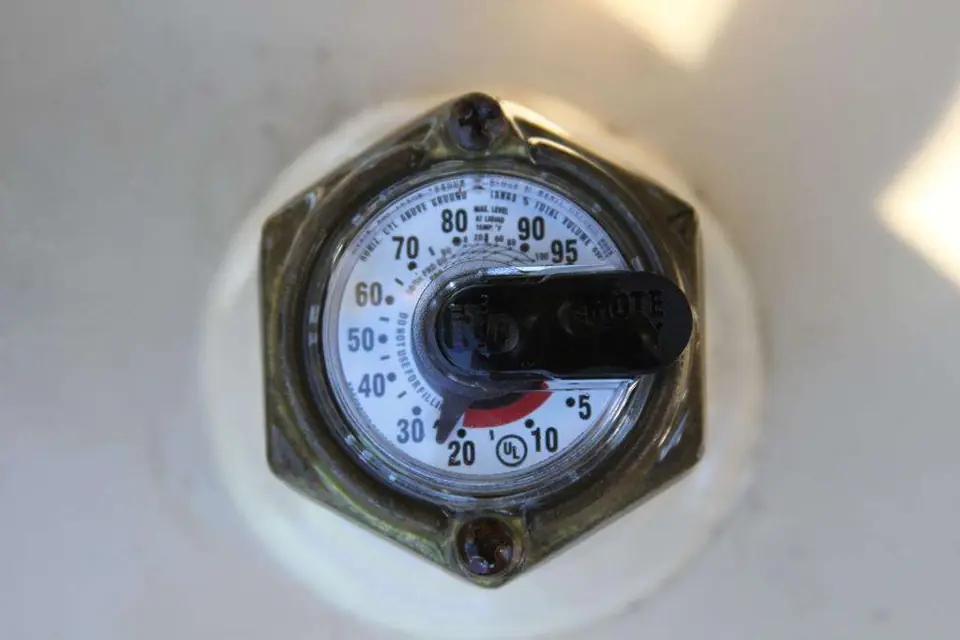
Clearing the ring around the tank
The Propane Education & Research Council gives the same basic advice: keep 10 feet around the tank and grill clear of anything combustible, and never store or use a propane cylinder indoors, in a garage, shed or tent.
- Scrape the first 10 feet down to bare soil. Gravel or pavers on bare ground also keep weeds from coming back.
- Keep dry grass, leaves, pine needles, brush and rags out of the next 10 feet.
- Do not stack firewood, lumber, or anything else that burns against or near the tank.
- Trim tree limbs so they do not hang over the tank, and clear leaf litter from under the dome.
- Re-check after spring growth and again before the height of fire season.
Tank upkeep that matters in fire country
A tank's relief valve is designed to let gas out if pressure climbs, and a light, heat-reflective paint color keeps the tank from soaking up summer heat. If your tank needs repainting, it must be cleaned first and painted with an oil-based primer and an oil-based alkyd finish in a light color. Tanks that were powder coated should not be painted. Call our office before you start.
Keep objects off the tank, and do not tie animals to it. A clear, reachable tank is easier for firefighters and for us.
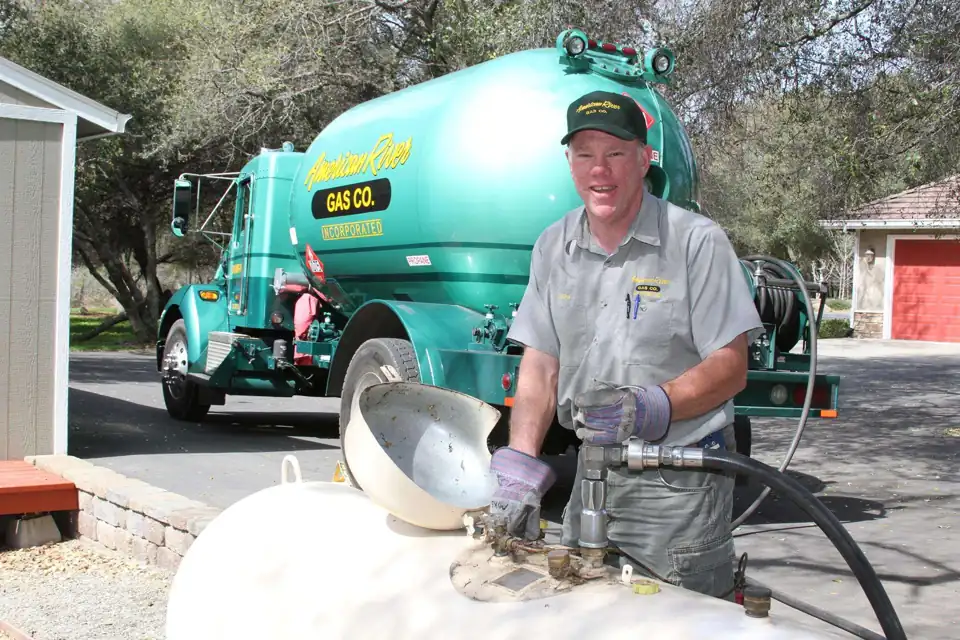
Planning for evacuation
Make a family plan before fire season. Post contact numbers for emergency services and for American River Gas, along with instructions for shutting off propane, electricity and water. The tank's service valve closes by turning it clockwise.
When an evacuation order comes, follow the instructions from fire officials and leave when told. If you do turn the propane off, have a technician inspect the system before it is turned back on. Move portable cylinders and grill tanks away from the house if you have time, and never take them inside.
Grills, cylinders and the rest of the yard
The same thinking applies to the smaller propane around your home. A barbecue or fire table with its own cylinder should have the same 10 feet of clear space around it, away from dry plants, deck furniture cushions and stacked wood. Spare cylinders belong outdoors, upright, and never in a garage, basement, shed or tent. When you refill cylinders at our Newcastle yard, bring them home in an upright position and put them back outside right away.
Even before the Zone 0 rules take effect, keeping the first 5 feet around the house clear is good practice, because that is where embers land first. A grill parked against the siding with a cylinder attached is worth moving before a Red Flag day.
After a fire
Do not turn your propane back on yourself. Look over the property carefully, watching for downed power lines, damaged gas lines or a tank that has shifted. Stay away from anything that looks damaged and call us at (530) 888-7438. A qualified technician should inspect the whole system before you use any appliance. If you smell gas, leave the area first, then call 911 and us from a safe distance.
Questions
Straight answers
How much clearance does a propane tank need from brush?
In State Responsibility Areas, 10 feet of bare mineral soil around the tank and no flammable vegetation for another 10 feet. Your local fire agency confirms what applies to your parcel.
Should I turn off my propane when I evacuate?
Follow the instructions from fire officials. If you do turn it off, have a technician inspect the system before it goes back on.
Can I plant shrubs to hide my propane tank?
Not within the cleared ring. Keep the first 10 feet bare and the next 10 feet free of flammable plants.
What color should my propane tank be?
A light, heat-reflective color. Dark paint lets the tank heat up, which can raise the pressure inside.
Who inspects defensible space?
CAL FIRE or your local fire agency, depending on where you live.
Related
Keep reading
Sources: California Code of Regulations, Title 14, section 1299.03: defensible space requirements (LPG tank clearance) (opens in a new tab) · California Public Resources Code section 4291: defensible space (100 feet, ember-resistant zone) (opens in a new tab) · Propane Education & Research Council: propane safety and wildfires (opens in a new tab)
Newcastle yard · since 1966
Questions about propane?
Call the office and talk to a real person. Or leave your details and we call you back.
Monday-Friday 8:00 AM-4:30 PM (closed noon-1:00 PM)
After hours, weekends and holidays, our answering service reaches a staff member.