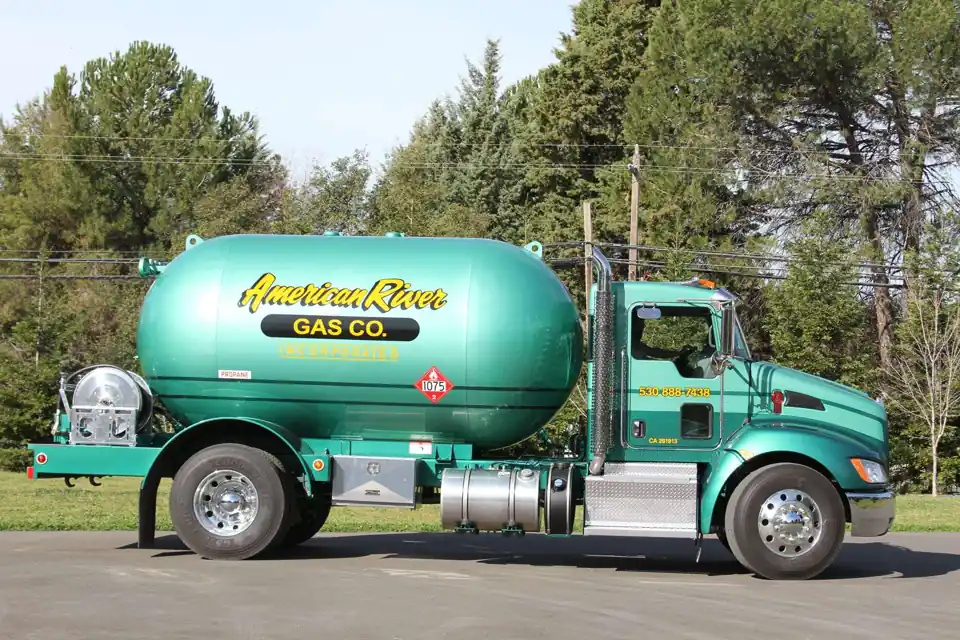
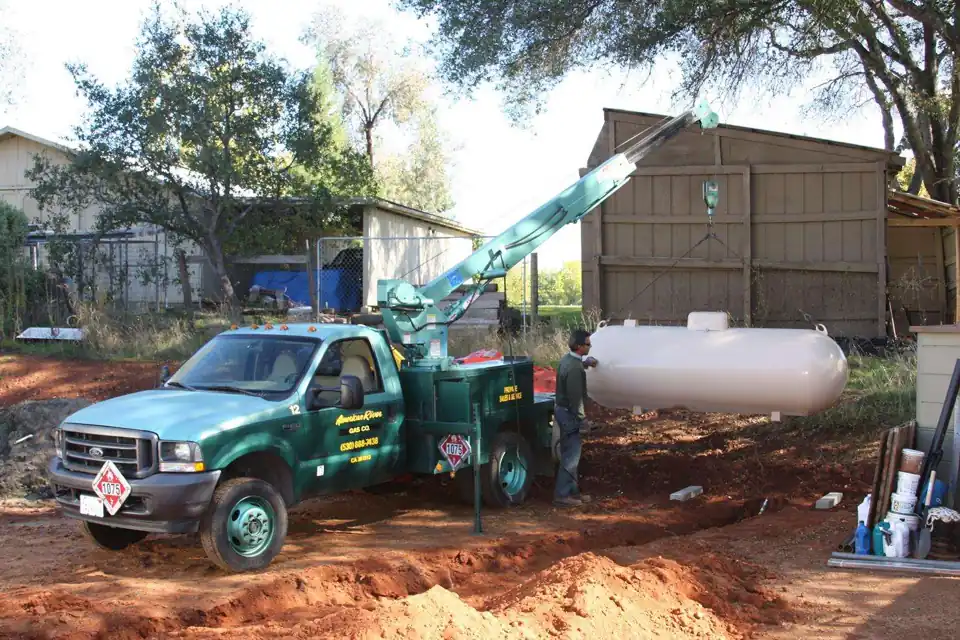
Tanks & gauges
Underground vs above-ground propane tanks
An above-ground propane tank is simpler to set, inspect and maintain, while an underground tank keeps the view clear but needs excavation, a tank built and coated for burial, and a dome that stays accessible at ground level. Setback distances depend on tank size and are confirmed for your lot, so the choice usually comes down to your lot, your soil, how the tank will look and how much site work you want to take on.
Updated · American River Gas office, Newcastle
The quick comparison
- Looks: above-ground tanks are visible; underground tanks show only a small dome at grade.
- Installation: above-ground tanks sit on a prepared base; underground tanks need a hole, bedding and backfill.
- Inspection: the whole above-ground tank is visible; an underground tank's shell is hidden, so its coating matters.
- Weather: above-ground tanks face sun, snow and falling limbs; underground tanks are sheltered but the dome still needs to stay clear.
- Delivery: both are filled the same way, and both need to be within reach of the hose.
What an above-ground tank involves
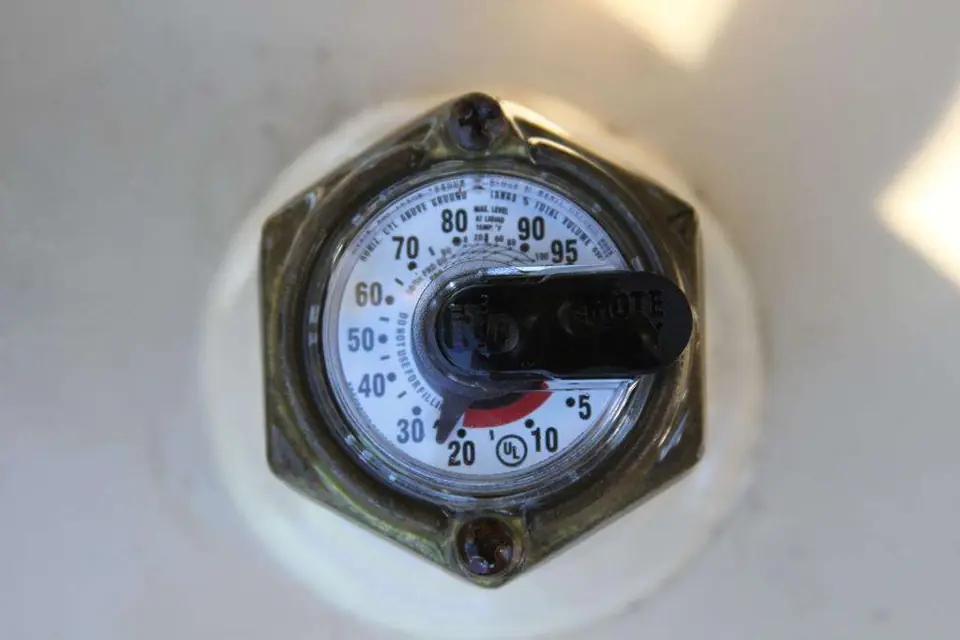
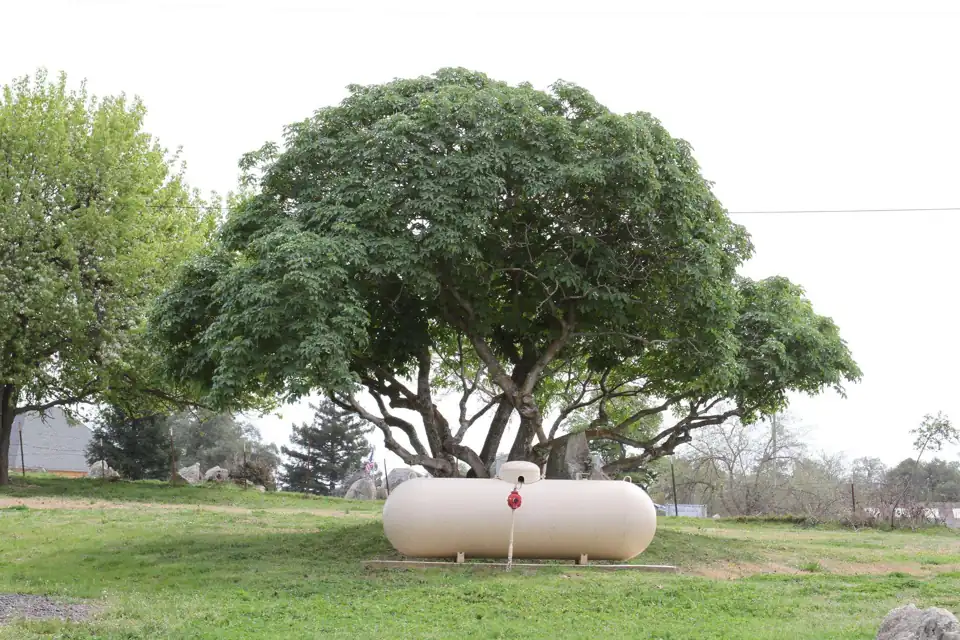
Above-ground tanks go on a firm, level base with room around them for the setback distances and for the driver to reach the fill valve. Everything is in view: the gauge, the valves, the regulator and the paint. That makes routine checks and repairs simple, and if the house is remodeled or the tank needs to be replaced with a larger one later, the work is usually straightforward.
In fire country, the tank needs a cleared ring around it, and in snow country it needs a marker and a clear path. If it is painted, it has to stay a light, heat-reflective color.
What an underground tank involves
Only tanks built and marked for underground service can be buried, and the data plate says which kind a tank is. The federal LP-gas standard requires a protective coating before burial, repair of any coating damage before backfilling, a firm foundation, and firmly tamped earth or sand around the tank. The top of the tank must be at least 6 inches below grade, and deeper, or otherwise protected, where vehicles could drive over it.
The dome with the fill valve, gauge and regulator stays above ground, so it still has to be reachable and kept clear of dirt, water and debris. Digging in rocky foothill ground can make the site work a bigger job, which is worth checking before you decide.
Setbacks for each type
Placer County's handout for installations below 5,000 feet lists these minimum distances from buildings and property lines:
- Up to 125 gallons, above ground: at least 5 feet, with some conditions allowing placement next to the building.
- 126 to 500 gallons, above ground: at least 10 feet.
- 501 to 2,000 gallons, above ground: at least 25 feet, though a single tank of 1,200 gallons or less may sit 10 feet away when no other tank is within 25 feet.
- Underground tanks: inspected and approved by the local fire district before the building final, so the fire district confirms the distances for an underground tank.
Which one fits your property
A few practical questions usually settle it:
- Is there a spot that meets the setbacks and that a truck can reach within 120 feet of hose?
- Would a visible tank block a view, a garden or a play area you care about?
- Is the ground rocky, wet or steep where the tank would go?
- Will vehicles ever drive or park near the spot?
- How much wildfire clearance and snow clearing are you willing to keep up around an above-ground tank?
- Do you expect to add a pool heater or other large appliance that might call for a bigger tank later?
The line to the house
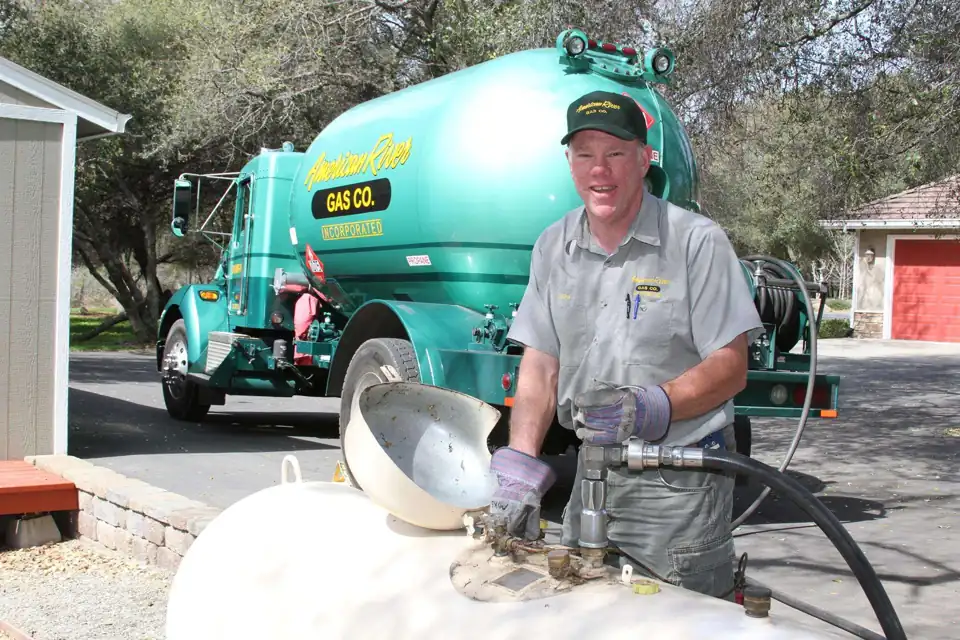
Either way, gas reaches the house through a buried line. American River Gas installs underground gas lines and regulators from the tank to the house, and every new installation gets a leak test before it goes into service. Before any digging, the utility locate service should mark buried lines on the property.
Your installer and the local permit office confirm tank placement and setbacks for your lot. To talk through which type fits your property, call (530) 888-7438.
Questions
Straight answers
Can I bury any propane tank?
No. Only tanks built and marked for underground service can be buried, and they need a protective coating before they go in the ground.
Can I read the gauge on an underground tank?
Yes. The gauge sits under the dome at ground level, just like on an above-ground tank.
Is an underground tank better in a wildfire?
The tank body is shielded by soil, but the dome, regulator and line above grade still need clearance. Keep the area around the dome clear either way.
Do underground tanks need a permit?
Tank installations are subject to local rules. Your installer and permit office confirm what your project needs.
Which is easier to maintain?
Above-ground tanks, since the whole tank is visible for inspection and repainting. An underground tank depends on its coating and on keeping the dome area clean and dry.
Related
Keep reading
Sources: Placer County Building Services: LP gas tank installation below 5,000 ft (handout) (opens in a new tab) · OSHA 29 CFR 1910.110, storage and handling of liquefied petroleum gases (container markings, underground installation) (opens in a new tab) · NFPA 58, Liquefied Petroleum Gas Code (opens in a new tab) · Propane Education & Research Council: getting your propane system inspected (opens in a new tab)
Newcastle yard · since 1966
Questions about propane?
Call the office and talk to a real person. Or leave your details and we call you back.
Monday-Friday 8:00 AM-4:30 PM (closed noon-1:00 PM)
After hours, weekends and holidays, our answering service reaches a staff member.