Buying, building & moving
Propane tank painting, placement and clearances
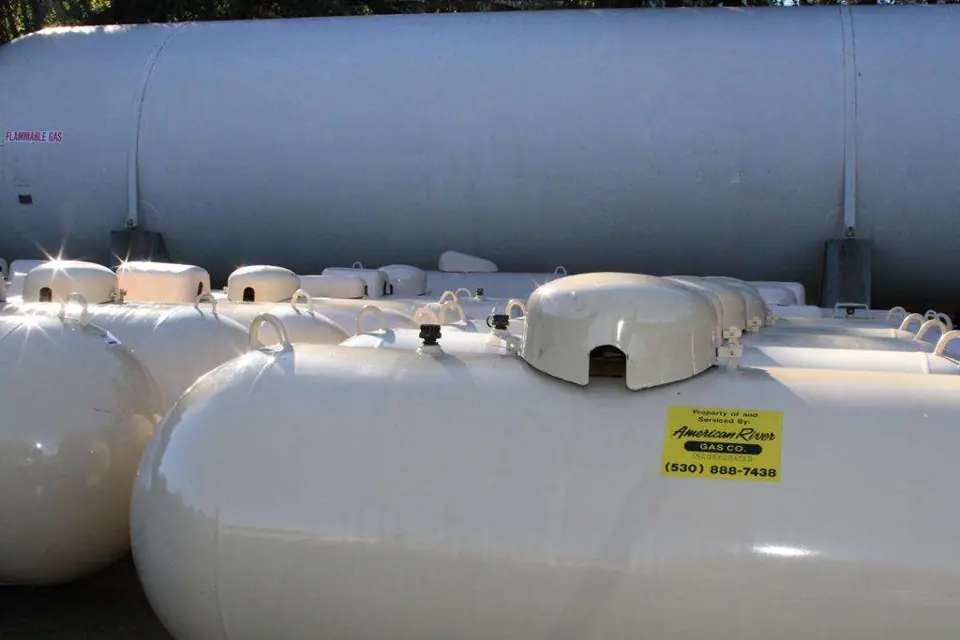
A propane tank should only be repainted if it was never powder coated, using an oil-based primer and a light, heat-reflective oil-based alkyd paint, and you should call your propane company before you start. Where the tank sits is set by its size: Placer County lists 5 feet from buildings and property lines for tanks up to 125 gallons, 10 feet for 126 to 500 gallons and 25 feet for most larger tanks, plus 10 feet between the fill connection and any source of ignition.
Updated · American River Gas office, Newcastle
Why the color of a tank is a safety question
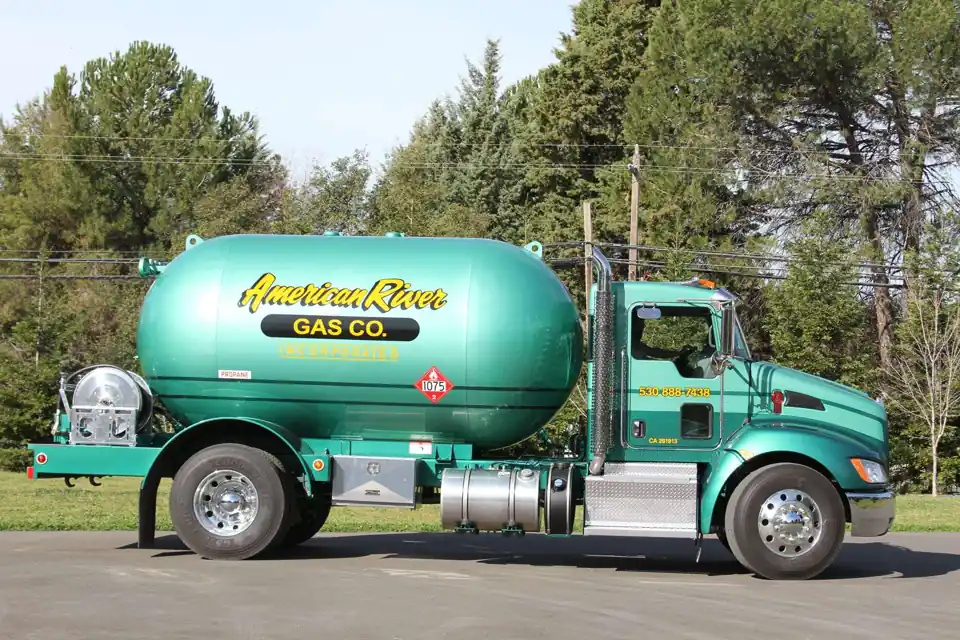
A residential tank sits in full sun for most of a foothill summer. The liquid inside warms, the vapor pressure climbs, and the tank's relief valve is there to vent gas if that pressure gets too high. A pale, reflective finish keeps the steel cooler and the pressure lower. A dark finish does the opposite, so a tank painted to blend into the hillside can end up releasing propane on a hot afternoon.
That is also why we never fill a tank all the way. American River Gas fills to about 86% in winter and 80% in summer, leaving room for the liquid to expand as the weather warms.
Can you paint your tank? The short checklist
Here is the practice we ask customers to follow before any brush touches the steel:
- Powder coated tanks: leave them alone. Paint does not bond to a powder coat and will peel.
- Tanks that were painted at the factory: they can be repainted once they are cleaned of dirt and rust.
- Use an industrial oil-based primer, then an oil-based alkyd top coat.
- Pick a light color that reflects heat, such as white or a pale gray.
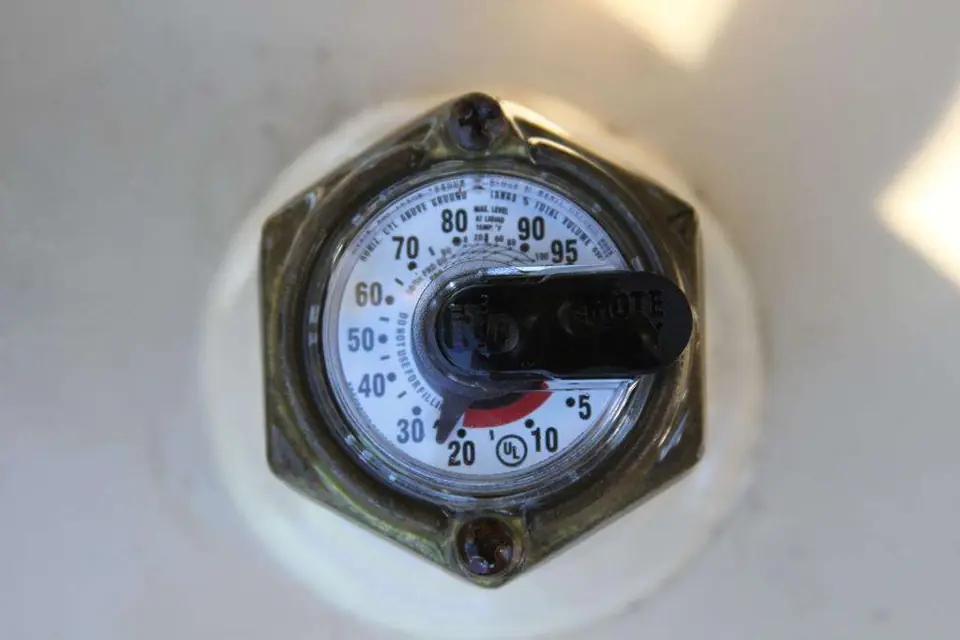
- Keep the data plate, the gauge face, the valves and any warning labels free of paint so they stay readable and working.
- Call the office at (530) 888-7438 before you open a can. A service technician can tell you whether your tank is a candidate.
Leased tank or your own tank?
If you lease the tank from us, it is our equipment, so tell us about peeling paint or rust instead of fixing it yourself. If you own the tank, upkeep is yours, but the same paint rules apply, and the office would rather hear from you before the first coat than after it. Not sure which kind you have? The office can check your account.
Where a tank is allowed to sit
Placer County Building Services publishes a one-page handout for tanks installed below 5,000 feet. It is the clearest plain-language summary we know of for our area, and it lines the distances up by tank size:
- Up to 125 gallons: at least 5 feet from buildings and property lines, and under certain conditions next to the building it serves.
- 126 to 500 gallons: at least 10 feet from buildings and property lines.
- 501 to 2,000 gallons: at least 25 feet, except that a single tank of 1,200 gallons or less may sit 10 feet away when no other tank is within 25 feet.
- Every tank filled on site: its fill connection and fixed liquid level gauge at least 10 feet from ignition sources such as the electrical service, an open flame, a furnace, an air conditioning compressor, or the air intake of a direct-vent appliance or ventilation system.
Clearances that change with the season
Code distances are only half the picture. In the State Responsibility Area, the Board of Forestry's defensible space rule calls for 10 feet of bare mineral soil around a propane tank and no flammable vegetation for another 10 feet past that. Ornamental shrubs planted to screen a tank usually end up inside that ring, so plan any screening beyond it.
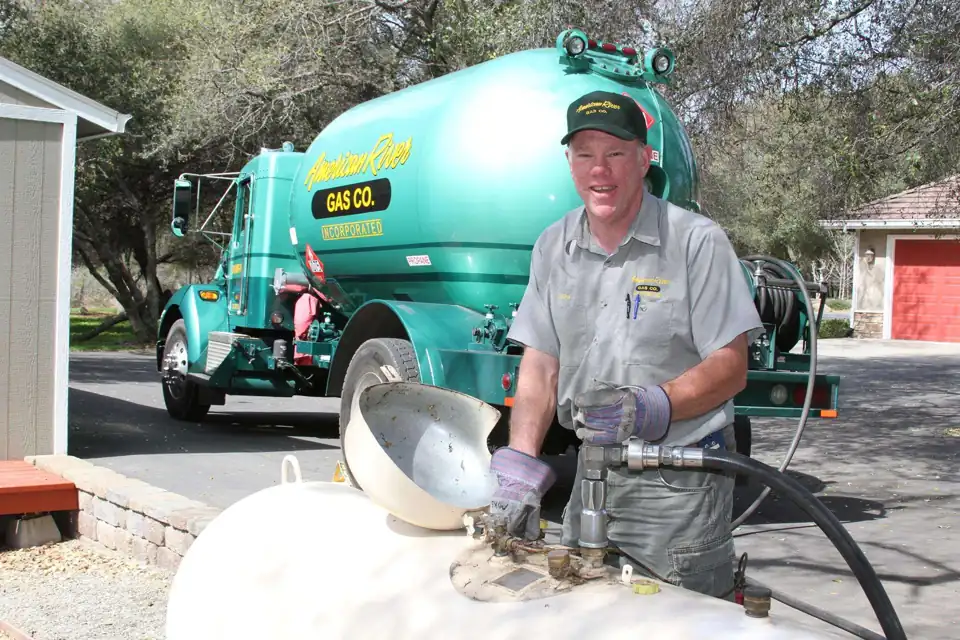
The delivery driver needs a way in, too. Our hose reaches 120 feet from the truck, and a new fence, raised bed or woodpile across the path eats up that length quickly. In snow country, the path has to stay open all winter, and the tank should be marked so a plow does not find it first. Above 5,000 feet, Placer County leaves tank placement to the local fire district.
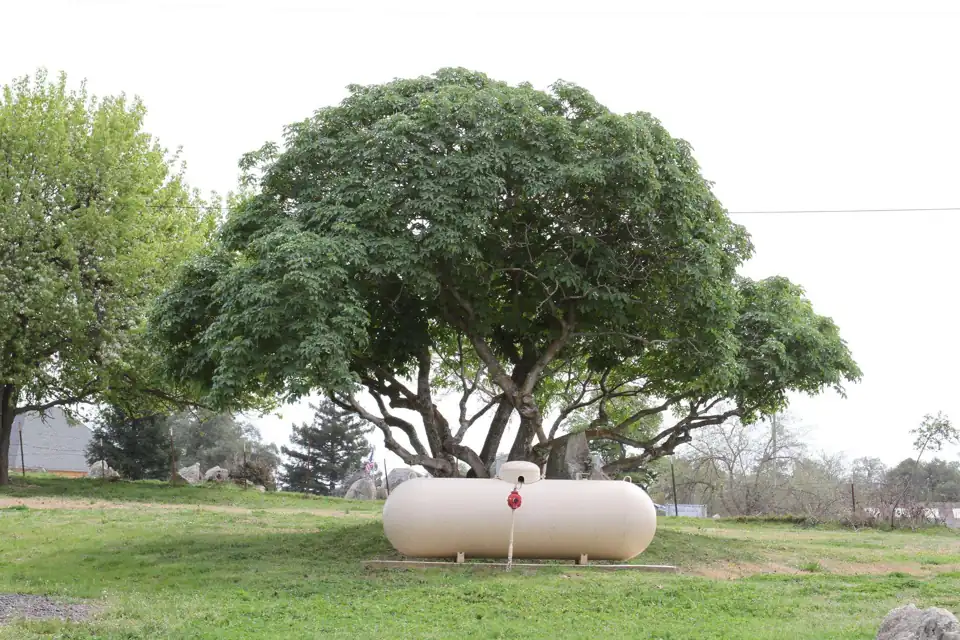
Moving a tank that is in the wrong spot
Remodels, additions, new decks and ADUs often put an existing tank too close to a wall or a new window. Moving it is not a do-it-yourself job. The tank has to be emptied or handled with the gas in it, the line to the house changes, and any modification to a propane system requires a leak test before it goes back into service. Call us early in your planning, and we will look at the site, the new location and the line run with you. If you smell gas at any point, leave the building first, then call 911 and us from outside.
Questions
Straight answers
What color should I paint my propane tank?
A light, heat-reflective color such as white or light gray. Dark colors let the tank heat up, which raises the pressure and can make the relief valve vent propane.
Can I paint a powder coated propane tank?
No. Paint does not stick to a powder coat. Only tanks that were originally painted can be repainted, after cleaning, with oil-based primer and alkyd paint.
How far does a 500-gallon tank have to be from my house?
Placer County's handout lists at least 10 feet from buildings and property lines for tanks of 126 to 500 gallons, and the fill connection must be 10 feet from ignition sources. Your permit office confirms your lot.
Can I build a fence or plant shrubs around my tank?
Keep flammable plants out of the 20-foot defensible space ring, keep the dome and valves open to reach, and leave a clear path for the delivery hose.
Can I move my propane tank myself?
No. Call us. A relocated tank means changes to the gas line, and the system needs a leak test before it goes back into service.
Related
Keep reading
Sources: Placer County Building Services: LP gas tank installation below 5,000 ft (setbacks, ignition sources) (opens in a new tab) · California Code of Regulations, Title 14, section 1299.03: defensible space around LPG tanks (opens in a new tab) · NFPA 58, Liquefied Petroleum Gas Code (National Fire Protection Association) (opens in a new tab) · American River Gas: tank painting rules, fill levels and leak test practice (company practice) (opens in a new tab)
Newcastle yard · since 1966
Questions about propane?
Call the office and talk to a real person. Or leave your details and we call you back.
Monday-Friday 8:00 AM-4:30 PM (closed noon-1:00 PM)
After hours, weekends and holidays, our answering service reaches a staff member.