Heating & appliances
Converting appliances from natural gas to propane
Most gas ranges, dryers, water heaters, furnaces and fireplaces can run on propane, but only after a conversion using the manufacturer's approved kit, which swaps the burner orifices and adjusts the gas valve or regulator for propane's higher pressure. It is a job for a qualified technician, and the system gets a leak check before the appliance goes back into service.
Updated · American River Gas office, Newcastle
Why an appliance has to be converted
Natural gas and propane are both clean-burning gases, but they are not interchangeable. Propane carries more energy in each cubic foot and is supplied to appliances at a higher pressure. An appliance set up for natural gas and fed propane without conversion can burn too rich, produce soot and carbon monoxide, and overheat. An appliance set up for propane and fed natural gas will run weak.
That is why every gas appliance is labeled for one fuel from the factory, and why the manufacturer publishes a specific conversion procedure. NFPA 54, the National Fuel Gas Code, and NFPA 58 for propane systems set the ground rules that installers follow.
What a conversion usually involves
The details vary by model, but most conversions follow the same pattern:
- Replacing the burner orifices (the small brass jets) with smaller propane orifices.
- Changing the pressure setting on the appliance's gas valve or regulator, or flipping or replacing a spring in it.
- Adjusting air shutters so the flame burns clean and blue.
- Attaching the conversion label that says the appliance now runs on propane.
- Testing for leaks and checking the flame and operation.
Check that a kit exists before you buy
Most major brands sell conversion kits for their gas appliances, but not every model has one. When you shop, look in the installation manual or ask the dealer for the propane conversion kit part number. Some appliances are also sold in a propane version from the factory, which saves the conversion step.
If you are moving an appliance from a home in town that had natural gas service, bring the model number to us. We can tell you whether conversion is practical before you haul a heavy range up the hill.
Who should do the work
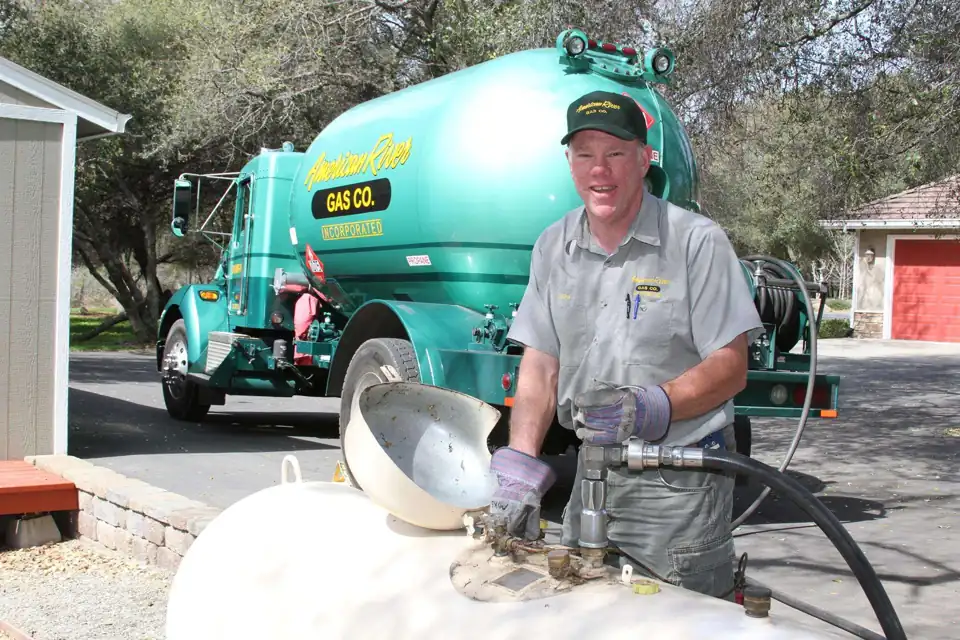
Conversions involve gas pressure, combustion and venting, so they should be done by a qualified technician. We handle appliance conversions for our current customers. Because a new appliance is being connected, the system gets a leak test, as it does any time an appliance is installed. Each appliance also needs its own shut-off valve within 6 feet.
Moving from a natural gas home to a propane home
Many people who move up to the foothills arrive with appliances bought for natural gas. Make a list: range, dryer, water heater, fireplace, grill and any other outdoor appliances. Some items, like a grill, may be simpler to replace with a propane model. Larger appliances are usually worth converting if a kit is available.
Also check the total load. Adding a large appliance, like a tankless water heater, can change the tank size and gas line size your home needs.
Before the technician arrives
A little preparation makes a conversion visit quicker and avoids a second trip:
- Find the model and serial number, usually on a rating plate inside a door, drawer or access panel.
- Locate the installation manual, or download it from the maker's website, and note the conversion kit part number.
- Buy the kit ahead of time if the dealer does not include it. Keep every small part in the bag.
- Clear space around the appliance so the technician can pull it out and reach the gas connection.
- Plan to be home. The gas has to be off during the work, and the system is tested before it comes back on.
Safety first
Never connect an unconverted appliance to propane, and never adjust a gas valve yourself. Install carbon monoxide alarms on every level of the home and outside sleeping areas, as the U.S. Consumer Product Safety Commission recommends. If you smell gas, leave the building first, then call 911 and us from outside.
Questions
Straight answers
Can a natural gas stove be converted to propane?
Usually, yes. Most ranges have a manufacturer conversion kit that changes the burner orifices and the regulator setting. Check the manual or ask the dealer for the kit part number.
What happens if you run a natural gas appliance on propane without converting it?
Propane is supplied at higher pressure and carries more energy per cubic foot, so the appliance can burn too rich, produce soot and carbon monoxide, and overheat. Always convert it first.
Can I convert an appliance myself?
It should be done by a qualified technician. The work involves gas pressure and combustion, and the system needs a leak test afterward.
Do you convert appliances?
Yes, for current customers. Call the office with the appliance make and model number.
Related
Keep reading
Sources: NFPA 54, National Fuel Gas Code (National Fire Protection Association) (opens in a new tab) · NFPA 58, Liquefied Petroleum Gas Code (National Fire Protection Association) (opens in a new tab) · Propane Education & Research Council: safety guide for propane users (opens in a new tab) · U.S. EPA: carbon monoxide and indoor air (includes CPSC alarm and annual appliance inspection advice) (opens in a new tab)
Newcastle yard · since 1966
Questions about propane?
Call the office and talk to a real person. Or leave your details and we call you back.
Monday-Friday 8:00 AM-4:30 PM (closed noon-1:00 PM)
After hours, weekends and holidays, our answering service reaches a staff member.